Reve Insiders is an exclusive network of global leaders, businesses, brands, professionals and creatives. Our 10 Questions Series is all about exploring what makes them tick. We find out how they are making a difference in the world we live in, or how they are making changes in their own lives to impact the lives of others. Our guest this week is none other than Liz Goll Lerner, a highly distinguished counselor, psychotherapist, and coach with over 30 years of dedicated experience. Renowned for her work in personal growth, Liz has helped countless individuals and couples lead authentic and inspired lives.
As a nationally recognized clinician and art therapist, she has earned acclaim for her pioneering contributions to the field of integrative healing. Liz’s innovative programs seamlessly blend traditional therapeutic techniques with creative, holistic approaches, offering transformative pathways to personal development and well-being.

REVE INSIDERS: Thank you so much for being on our series! We’re gonna hop into the questions. So Liz, founding your practice with over 30 years of experience in counseling, coaching, and art therapy. What inspired you to start your own practice, and what keeps you motivated to continue this work after all these years?
Liz Goll Lerner: Oh, thank you so much! And what a great introduction! I appreciate that. So I was inspired to start my practice many, many years ago. After working in the hospital system as a clinician, and really found that people were focused on what was wrong and trying to fix a particular problem. My approach and the developing approaches over time have been really about looking at the whole person. And so I wanted the flexibility to work with people in a way that really took into account everything that was going on, especially their strengths, not just the problem at hand, because we want our strengths to be able to support us when we have something difficult that we want to solve or heal and so on. And then I think the second part of your question was, what keeps keeps me working in the field? I think it’s really exciting to see people evolve and transform, heal and change and create different ways of being in their lives. To solve some problems, or be adventurous and create new avenues of things they want to do or how they want to live. That’s really great reinforcement to keep doing what I’m doing.

REVE INSIDERS: Right, and in terms of personal wellness. You’ve been in this field for so long, and continuously supporting others can be demanding, so how do you ensure that you’re also taking care of your own well-being and keeping your cup full?
Liz Goll Lerner: So I think there are a few different answers to that question. Actually, now that I’ve had a little time to think about it, I think the beginning of doing this kind of work, whether it’s coaching or therapy, the thing that is so important is good training and understanding how to have kind of a distance from the problem that someone else is having, being able to take it in and be empathetic, but not feel all of it at the same time so that I’m not taking in person after person’s issues. I’m really there as a reflector and an empathizer and a director. So, having good boundaries is really important to be able to keep doing this work. But I think the other pieces are knowing when to take a break, knowing when it’s time for some outside nature-time or some meditation. I think keeping oneself in a kind of healthy frame, just the regular things that everyone wants to do right, like eating well, getting exercise. You know, having fun, having joy in your life, doing things that interest you. They fill our cups. And so, however hard we’re working in whatever our field, we always want to make sure we’re in balance. I think balance is a really important part of it.

REVE INSIDERS: That’s so beautiful, especially the part about how you balance doing things that you love, and also refraining from certain habits and setting those boundaries, it’s a really nice balance. So walk us through a glimpse of some of your sessions. What does a typical session look like, especially for clients experiencing coaching for the first time?
Liz Goll Lerner: Okay, so there are a variety of coaching types that people can come to me for. So depending on what they’re doing… actually, let me rephrase, regardless of what they’re doing, we’re going to do a discovery call or a discovery session about why they’re coming, what it is they’re trying to solve. If this is a long-term thing, a short-term thing, if it’s an occupational concern or a personal relational concern. So we get the lay of the land and the first thing is to make sure that the person’s in the right place. Right? Am I someone who can really help them or would someone else be better? Is it a topic that I specialize in? That’s very important, because we want people to always be in the right place. And I love referring people to the right place if it’s not me. Then we set up a set a plan or if it’s an intensive, there’s a prescribed number of sessions or a number of hours that we work together organically, intensively. If it’s something more long term, we’ll set up a schedule. But in terms of the actual session itself, in the very beginning we’ll be looking at what the vision is, what is it that the person really wants to achieve, what’s in the way, and what’s the way forward? And that may involve a lot of different pieces of techniques that I use, or a little bit more conversation about the background. We might be using meditation, integration of mind, body, spirit, to get kind of a little bit deeper into how the feeling is effecting the person and then we move toward the direction in a compassionate strategic way, and that might look like body movement, or it might look like a conversation.
There’s a lot of different techniques that I use because I feel like when we talk about wellness and creativity and quality, there’s a quality about how we hold ourselves, how we walk through the world, and I think that kind of focus and consciousness around how we do that is really important in any concern that we want to solve.

REVE INSIDERS: Agreed. One of those techniques is art therapy, which is something that sounds very interesting to learn about, but as a pioneer in art therapy, what role do you believe art plays in the healing process and are there any unique benefits it offers compared to other therapeutic approaches?
Liz Goll Lerner: That’s a really good question. Okay, so art therapy is a licensed therapeutic tool. It’s a profession on its own, and it’s used in a variety of populations and settings. From disaster, relief to inpatient psychiatry, to working with children, and the elderly. It’s really a modality that is effective with multiple groups of people for multiple different reasons. The distinct benefit, I think, of art therapy, and why I chose that as my initial training is that it focuses on the strengths that people have. So, it’s when people make art that the unconscious and conscious come together. Even when someone knows nothing about using art materials, it gives them a voice where a dot on a piece of paper made by someone may represent “love to me, or pain to me or happiness to me.” They’re beginning to create a symbolic language and it adds to the conversation of what they may be going through. Using the materials, they can also end up building the solution to what they’re going through, with assistance.
So, to give you an example from before I became an art therapist, I did a course and a training in it, and I had to go work with children at a school and of course we were supervised, but I had a little boy in a group who kept wanting to be in all the groups. It was kind of an open school platform, and when he finally was able to come in, he drew a picture of a tiny little person and next to the person was a big monster. I didn’t really know much about art therapy at the time, but I was learning, and I just said, “Oh, tell me about your picture.” Then he said, “The little boy can’t go home because of the monster,” and it turned out there were scary people between school and home, and it was hard to get home. He was afraid and so I said, “Well, is there anything you can put in the picture that would help the little boy?” And he thought about it, and he just started drawing, and he drew another monster. So I said, “Well, what’s happening?” And he said, “The monsters are fighting each other so the boy can can run around them and go home.” So he solved the problem. It’s not a real life problem but one of the things that he learned or he solved in that little session was that he had some power. He had some power to control something about the situation. Now, maybe it was just how he felt about it, but what was interesting is this little boy, as were most of the kids who came into art therapy sessions, were kids who were either not behaving or who were very, very quiet. And he was one of the not-behaving kids, and the whole time that I was at the school he never misbehaved. So there’s a big power in somebody creating their own symbolism.
There’s a power in working through a problem, even if you’re not talking about it directly. And this is just one very small example of what happens. It’s also used diagnostically. For people who have trouble talking about their emotions, anything creative, and particularly art therapy is a vehicle to help them express whatever it is that’s going on, and a way for them to actually communicate with someone about what’s happening. So sometimes art therapy is simply making art. And sometimes it’s what I’ve described, where it’s art and conversation and discussion of what’s going on in the work.

REVE INSIDERS: Given the different kinds of people that you work with from kids to adults like you mentioned just now, when is it the right time to seek out therapy? How can someone recognize when it’s time to actually get that help and seek out a therapist?
Liz Goll Lerner: There’s a variety of modalities out there for people to get help with emotional difficulties. And I think when someone is uncomfortable in a way that is affecting their lives, is anxious, worried, or sad every day, and they can’t seem to break free of it…they’re not experiencing joy, or they feel hopeless, or they’re not sure what to do in their lives to change some situation that is difficult or detrimental, that it always is helpful to at least reach out and see what help is available. Because a lot of times people kind of just accept that they’re not feeling good. To get help doesn’t mean there’s something terribly serious going on. But you also want to make sure there isn’t something serious happening that can be helped. A lot of times people might feel hopeless and feel like there’s nothing that can help their situation, but you really don’t know that until you find out.

REVE INSIDERS: Great, so at Reve today, we have a slogan, and that is to live well. How do you interpret this in your work and in your life? And what guidance do you offer clients who wish to pursue this fuller and more balanced life?
Liz Goll Lerner: I’m going to take a little bit from our previous question because I think maintaining balance, staying on top of your health, getting exercise, and eating well are all key. There are also basic things like getting enough sleep. Sleeping well is so essential to feeling good, staying healthy, and being able to handle stress. When we’re sleep-deprived, we’re more tense, uncomfortable, and easily distressed. So, I think sleep is critical and should be a goal for living well. It’s also important to recognize what’s happening inside of us and to be present in the moment. A lot of what I’ve found is that a lot of people’s discomfort and distress often come from things that happened yesterday, the day before, or even five years ago. There are so many concerns in the world right now, but if we’re not present, not just in our heads, we lose the ability to shape how the next moment unfolds. For example, if I’m thinking about what I’ll do after this conversation, I’m not really here with you. I’d rather be fully present so I can listen to you, connect with you, understand your mood, and engage with what you’re sharing. If I were just rushing through to get to the next thing, I wouldn’t feel grounded. And that lack of presence can cause a lot of distress. To address this, I’ve developed a methodology called the Quantum Presence Technique®.
This tool helps people recognize when they’re not present. Most of us live only partially in the moment and think we can multitask, but the brain can only truly focus on one thing at a time. I teach people how to connect their mind, body, and spirit to stay fully present. The second and third parts of the technique focus on navigating and mastering past and future worries so we can respond intentionally. I call it being the master of your own ship. When we’re not present, I say we’ve “left the ship.” My clients know this phrase well. When that happens, I guide them to come back and regain control. The great thing about this technique is that it’s simple and, once mastered, quick to implement.

REVE INSIDERS: This might be a little off-topic, but based on our conversation, what do you think prevents so many of us from being present, even though we want to be?
Liz Goll Lerner: So, I’m going to define presence in two ways. One is being present in the moment with the person that you’re with, or the people that you’re with, and one is simply being present in yourself. I’m going to work backwards. Let’s say during the holidays, or being with family, and thinking about work or things like that. What shows up, I think, when people are engaged in what you were saying, is a feeling of loss. That “Oh, I’m here, but I’m not really here, and I’m missing something.” Why does that happen? I think there are a lot of reasons why it can happen. But for our purpose, when you’re thinking about work and wanting to have more for your family, do more, or grow a business — that’s a worry. If you’re sitting with your family and thinking about the business — like, “How can I do this better? Oh, there’s an issue I need to solve” — some of that is real, and some of it isn’t. The real thing might be something that actually malfunctioned and needs immediate attention. That would be real. Worrying about not being there, wherever “there” is, is not real. Worry is a thought. It’s a thought that our emotions follow, and it’s a thought that takes us away from whatever we’re doing or whoever we’re with. Now, why does that thought happen? Sometimes it’s poor planning. Sometimes it’s just that this worry is constant, always at the top of mind. If it’s constant, people are never really present. We walk around in our bodies as vehicles — doing things, thinking things, moving from one task to the next. I’m not a model of presence all the time, but I try. It’s really about a decision — actually, a choice. It takes recognizing that some of the things we’re thinking about are not essential to the moment we’re in and may not even be essential to the business at that moment.
We think that thinking about something in the future is preparation, but it isn’t. Preparation is sitting down and saying, “Okay, I want this team member to do this, so I’ll make a list to ensure it happens correctly.” Worrying about whether it will happen correctly isn’t preparation, It’s worry. It gets confusing because we live in a world of constant distraction. Unless we shut off a device, we’re always in motion — around our business, the world, family issues — all important things. But are they all important every minute? There are steps to this, and people have to decide to learn or master it. Or, they might just take something from this conversation and think about it. To walk into a space with family or during the holidays, and decide beforehand, “I’m going to pay attention to what’s happening right now” — that’s key. Every moment is fleeting — the future becomes the past in an instant. The idea is to choose where we place our attention. People who meditate or practice mindfulness sometimes find this easier. I do a lot of mindfulness work with people in my programs, retreats, or sessions because it’s important to feel what it’s like to be still, to be in their body. But then there are other distractions, especially around the holidays.
People might be seeing relatives they haven’t seen in a long time. Maybe there’s unresolved conflict, discomfort, or worry about certain conversations. The distraction becomes the worry. That kind of distraction requires attention. It’s not about worry as preparation but real preparation, like talking to a professional if it’s a serious issue, speaking to a friend, journaling, or even asking yourself: – How do I want to think about this? – How do I want to show up? – What’s my intention in showing up with this person? For example, am I willing to simply be present and listen? Or, if I’ve been hurt, am I prepared to say, “You really hurt my feelings. But I’m here because we’re family, I love you, and I don’t want to dwell on the past. I just wanted you to know, and I’d like to move on.” It’s important to understand that you can’t always expect an apology, but that’s part of deciding what you want from the interaction. Some people might just want to be polite, avoid any deep conversation, and get through the day without holding onto discomfort. But letting go of that worry or discomfort takes preparation. However, worry itself is not preparation. Walking into a room with someone you’re uneasy around and letting that worry consume you, takes you away from being present. Even if you’re physically in the room, your mind might be preoccupied with thoughts like: – Will it be okay to talk to this person? – How will they react? That kind of thinking creates the illusion of being present when, in reality, you’re not fully there.

REVE INSIDERS: Liz, your unique coaching methodology is clearly distinctive. You just walked us through a coaching session and we ended up discussing the importance of being present. You really emphasized the integration of mind, body, soul, and spirit which feels like the pinnacle of presence, when all those aspects align. Can you share more about your approach and how it has been effective?
Liz Goll Lerner: Agreed and that’s foundational in my coaching sessions. I call a lot of my work psychoeducational because you have to understand some basic things or come to an agreement about some basic things about human nature, or about how people do things to be able to go deeper. So then, the deeper part of that coaching session might be an example of what the person was thinking about, or what an issue might be with a family member, and then taking that to What? Where? Why? does that affect that individual in the way that it does? It’s not everybody that’s affected the same way by the same experience, or the same situations. So what is unique to them? What shows up for them that really is disempowering, or empowering. What are the nuances to that? And helping them come into a consciousness by being present to body, emotion, mind and spirit. Our bodies are our messengers, so our bodies tell us when something is going on. We tighten up or we feel free. Right? We have a pain, or we don’t. So the work that I do is using a variety of modalities, finding that little golden nugget that kind of opens everything up for someone which allows them to approach something very differently. So, for example, as you know, I have a book coming out on divorce, divorcing well and thriving. So the people who come to me to want to do that differently are really having to look at so many things about what’s going on in that system? What is it that’s personally affecting them so much that they have may have difficulty, not being angry or acting that anger out. How can you do this well?
So there’s that group of people that I work with. There are people and organizations that I work with who are a large piece of my focus. Once people are understand this basic piece next is how does that affect our communication? So with individuals, with relationships, with organizations, with systems, how does this information affect how a business deal gets done, how people work together in an organization that’s a mission-driven organization. Because communication is our tool. Right? Here we are having this interview, this conversation, because that’s what we’ve got to do to share information. And our body language, what’s underneath it, our tone of voice, the words we choose to use, all represent something going on inside of us. So, I like to say, yes, we can learn the right words. We can learn the right tools but we also have to understand what’s happening inside, so that we’re not projecting something that we don’t want to project outside that will tank our mission or tank our conversation and not help us move forward right or help the situation move forward, or the business move forward, or the mission move forward, or the reformation of a family move forward, in a healthy way.

REVE INSIDERS: Absolutely. You also mentioned your book, and that’s actually the next question. And it’s very interesting – the way you frame “divorcing well.” Navigating divorce with an emphasis on finding peace throughout the process is quite unique. As we know, divorce is often messy and stereotypically portrayed as an unpleasant experience. So could you share a little about this approach and how it will help readers and viewers handle challenging transitions with greater ease and understanding?
Liz Goll Lerner: We’d need a whole interview for that question. But essentially, the book is titled “Divorce Well and Thrive®, Your Guide to Being Your Best Self Under the Worst Circumstances.” Building on our previous discussion, a key point is acknowledging that it’s possible to navigate divorce differently than the common perception. Many of my clients initially believed that divorce could only be a chaotic and painful experience. The concept itself, for many, is difficult to grasp. People are often angry, and expect the worst from each other. They anticipate defensiveness, conflict, and the need for aggressive legal representation. However, when people open themselves to the possibility of a different approach, they need a compelling reason to pursue it. For me, and for many of my clients, that reason is minimizing suffering. Engaging in constant conflict and creating unnecessary drama rarely leads to long-term well-being. While there might be moments of perceived “winning”.
The real win is to work together to create a solution that is a compassionate strategy and refusing to take the bait for a fight. Allowing yourself to step back and think about what the vision is. It’s especially important when children are involved, witnessing arguments and experiencing trauma. Being able to step back and establish a vision such as ensuring the least amount of harm for the child is crucial. This applies whether parents are deciding to separate or are already navigating co-parenting transitions. Having that vision acts like a grounding pole when things start to spiral. It helps people to pause and think. For example,If I want this outcome, I need to act a certain way right now because every action and word we choose creates a landscape, just as every conflict we avoid does as well. It’s not about winning or losing. Deciding not to fight or choosing compromise isn’t a loss. It’s about finding a new way to win—where everyone benefits emotionally, even if children aren’t involved. The damage from the relationship may already be there, so why perpetuate it? When people take the time to sit down, listen, and work on a solution, they sometimes discover they don’t want to get divorced at all. Often, the root of the problem has never been communicated because it feels too overwhelming. However, with help—whether through couples counseling, workshops, or even self-help resources—it’s possible to move in a new direction. The first section of my book is titled So You Think You Want to Get a Divorce? It explores whether divorce is the right step. Have you considered all the possibilities? If the answer is yes, then the book offers strategic and compassionate approaches to move forward positively. The subsequent sections build on this, guiding readers through the process.

REVE INSIDERS: Some people struggle with bringing up specific conversations, being direct, or addressing the elephant in the room. What do you believe is essential for those individuals to heal, and what advice would you give to someone struggling with the decision to reach out?
Liz Goll Lerner: There are a couple of answers because there are different questions in that. For someone struggling to reach out for help, it’s important to identify the root of the struggle. Is it stigma? Not knowing where to go? Wanting privacy? These concerns are common. Culturally, I think we’ve evolved in how we view seeking help. As we discussed earlier, there are various ways to get support—coaching, support groups, or organizations addressing specific worries. Still, admitting that we don’t have all the answers can feel overwhelming. It might even make us feel powerless, but there’s great strength in recognizing when we need assistance to solve a problem or feel better. For couples, therapy or counseling can provide the advantage of a neutral party to mediate discussions. That neutrality can be incredibly helpful. Similarly, in friendships where someone hesitates to bring something up, approaching the situation from a place of love and neutrality is key. Communicate with the intention of improving the relationship and being heard. Of course, there’s no guarantee the person will hear you or that the issue will be resolved. However, if the problem affects the friendship significantly, you really have to evaluate what’s healthy, what serves you, and what doesn’t. Sometimes, that leads to other decisions. Regardless, it’s always worth approaching hard conversations with honesty, compassion, and care. Chances are, the other person is aware of the tension too and would likely prefer resolution over discomfort.
Watch the full Interview on our YouTube channel!
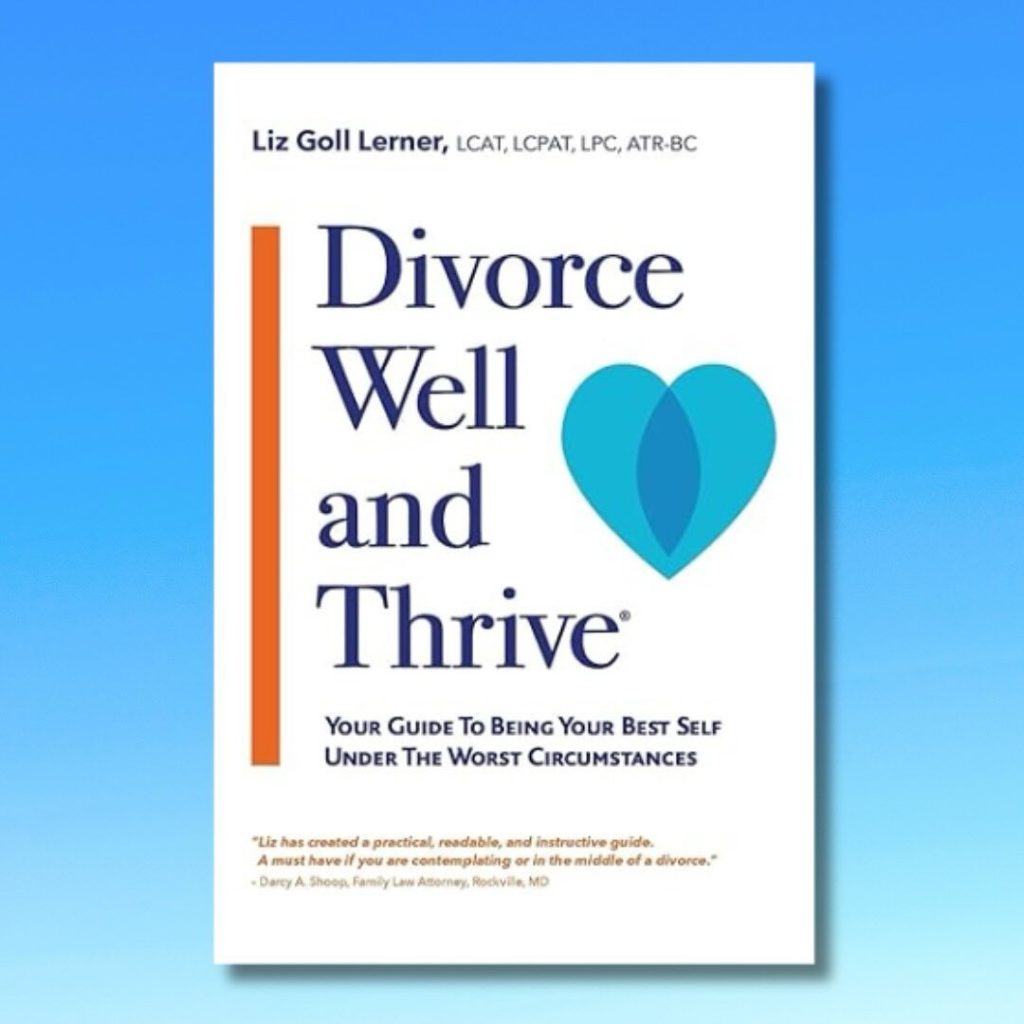
Divorce Well and Thrive is a practical step-by-step guide written to prepare you for all the ins and outs of a no-harm divorce. The book is packed with examples and tips to teach you how to be in the driver’s seat of every conversation and situation, and emerge knowing you did the best you could to find the best path.
The book is accessible and available on Amazon.